Volunteer Coral Conservation in the UK: How to Get Involved
From beach cleans and Seasearch dive surveys to aquarium volunteering and cold-water coral recording, here...

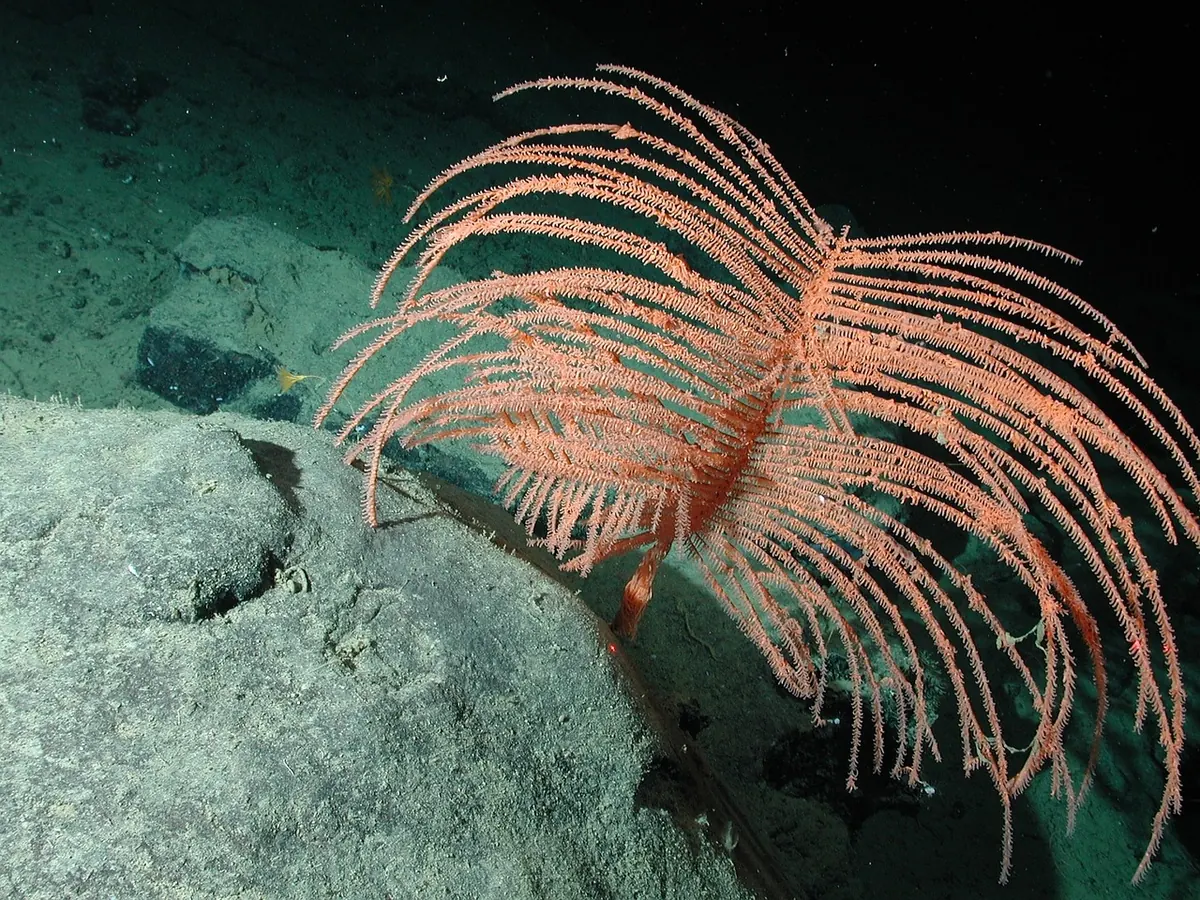
Say the words "coral reef" and most people picture warm, turquoise water, parrotfish and a holiday brochure. Around the UK, the reality is darker, colder and much less photographed, and it is still a reef. On the seabed off Scotland's west coast, in the Rockall Trough and along the continental shelf edge, corals build thickets and mounds in water that rarely climbs far above 10°C. They shelter fish, sponges, starfish and crustaceans in numbers that would surprise most beachgoers, and they are among the most fragile habitats in our seas.
Our reef-builders are a different breed from their tropical cousins. The main architects in UK waters are Lophelia pertusa — increasingly known to scientists as Desmophyllum pertusum — and Madrepora oculata. Neither contains the symbiotic algae that give shallow corals their colour and most of their food, so they have no need for sunlight. Instead they sit in currents and catch plankton and organic particles drifting past, using tentacles that unfurl when the water is moving.
Because they do not depend on light, they can live hundreds of metres down, in the cold, dark water of the continental slope. Growth is painfully slow: a few millimetres a year in good conditions. A reef mound that looks like a modest bump on a chart may have taken thousands of years to build, which is why damage to it is not something that repairs itself within a human lifetime.
Cold-water corals occur on hard surfaces where currents are strong enough to deliver food but not so strong that larvae are swept away. In practice, that means the west and north of Scotland, the shelf edge, and the deeper water of the south-west approaches.
The Mingulay Reef complex, west of Barra, is one of the best-studied examples in UK waters — a series of coral ridges sitting in a channel where tidal currents run hard. Further out, the Hebrides Terrace Seamount and the slopes around St Kilda and the Outer Hebrides hold patches of coral, sea fans and sponge grounds. Much of this has been surveyed by remote cameras rather than divers, because the depth puts it beyond recreational diving.
North-west of Scotland, the Darwin Mounds are fields of small coral mounds, first mapped in the late 1990s. They became a test case for marine protection: emergency measures closed the area to bottom trawling in 2004, and it was later designated as a Special Area of Conservation. Nearby, the flanks of Rockall Bank and Hatton Bank support coral, sponges and other slow-growing animals on a scale that is still being documented.
The Faroe-Shetland Channel carries colder, deeper water southwards and holds coral communities along its slopes. To the south-west, the Porcupine Seabight and the canyons of the Celtic Sea margin, including the Whittard Canyon system, support corals and coral-associated species in water that feels a long way from any British beach.
A living coral framework is not just a coral. It is architecture. The branching thickets slow the current, trap sediment and create crevices, ledges and overhangs at every scale. That structure is what other animals come for:
For commercial fish such as redfish, that nursery function matters. A coral thicket gives small fish somewhere to hide, and it gives predators something to negotiate — both of which influence how many survive to adulthood.
The most immediate pressure is physical damage from fishing gear. Bottom trawls and dredges can flatten coral in a single pass, and the scars from historic trawling are still visible on some mounds. Lost creels, pots and nets keep snagging and smothering coral long after they are abandoned, a problem known as ghost gear.
Other pressures are slower and harder to see. Pipelines, cables and offshore infrastructure disturb the seabed and can smother nearby communities with sediment. Marine litter drifts into deep water and snags on coral. On land, runoff carrying silt and nutrients can affect shallower reef areas.
Climate change works on both ends of the problem. Warming water shifts the currents and plankton that feed these reefs, while ocean acidification makes it chemically harder for corals to build their calcium carbonate skeletons. Add the sheer slowness of growth and recovery, and a damaged reef can remain damaged for centuries.
The UK has a network of marine protected areas covering many coral features, including Special Areas of Conservation designated for reefs, plus fisheries closures negotiated for particularly sensitive sites. Government advisers, including the Joint Nature Conservation Committee and NatureScot, provide the scientific evidence behind those designations, and offshore sites are monitored through periodic survey work.
The gap is usually in management rather than designation. A boundary line on a map does not by itself stop every damaging activity, and regulators must balance conservation with fishing, energy and shipping interests. Cumulative impacts, and the global effects of warming and acidification, cannot be fixed by a single closure. That is why accurate mapping, monitoring and enforcement matter as much as the paperwork.
You do not need a research vessel to make a difference. Most of the practical work happens through choices, records and pressure on decision-makers.
Cold-water reefs are not an exotic concern in distant oceans. They sit within a few hundred miles of most of the UK, they are protected only as well as we choose to protect them, and they are far easier to lose than to rebuild. Learning their names is a reasonable first step; the second is treating them as part of the coastline we already care about.
Photo: 12019 / Pixabay
From beach cleans and Seasearch dive surveys to aquarium volunteering and cold-water coral recording, here...
Rising carbon dioxide is making seawater less alkaline, which slows the growth of coral skeletons. Here's...
A practical beginner's guide to building a home reef tank that thrives while keeping pressure off wild reefs.